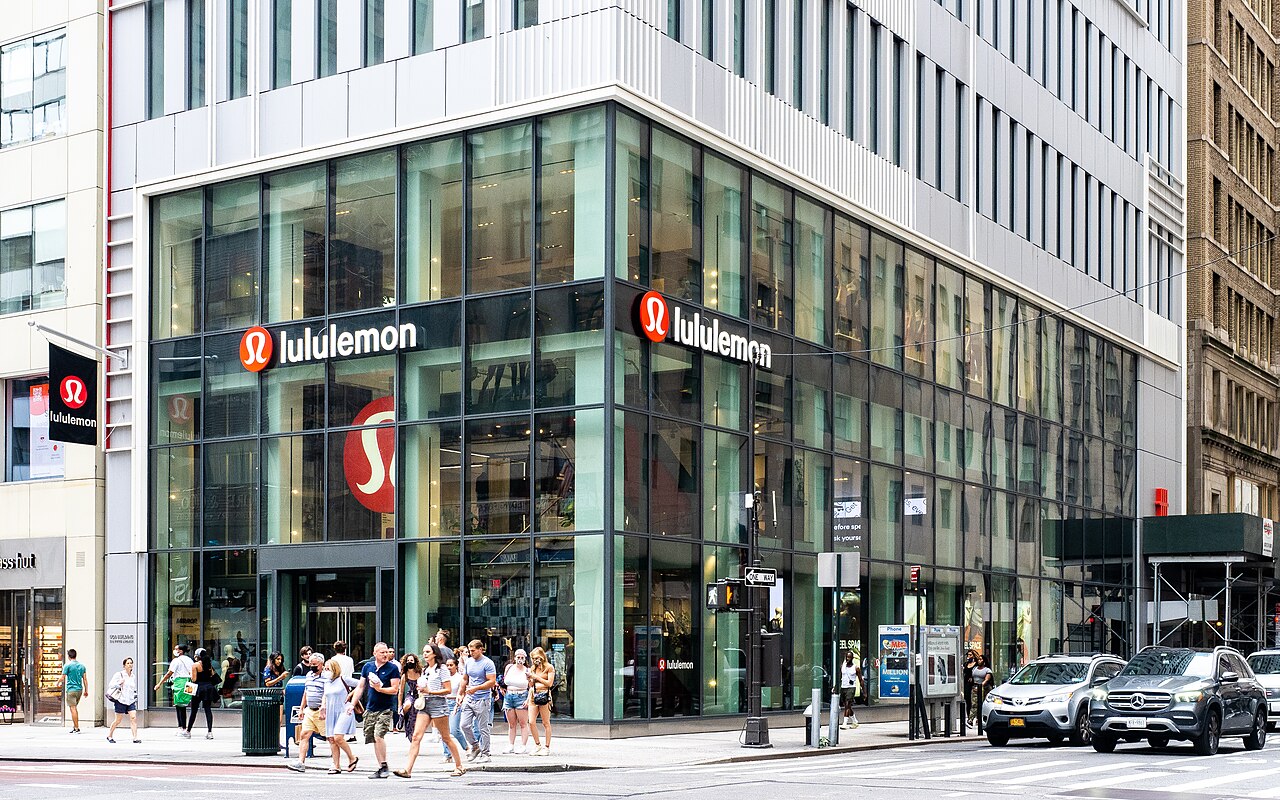
Lululemon just closed a fiscal year most retailers would envy. Net revenue hit a record $11.1 billion, up 5% year-on-year. International markets surged 22%. The brand guided to yet another year of growth in fiscal 2026.
And yet, buried beneath the headline numbers, there's a problem that no earnings call soundbite can fully explain: Americas revenue declined 1% for the full year. Diluted EPS fell from $14.64 to $13.26. Full-price selling — the engine of Lululemon's premium positioning — softened enough for management to flag its recovery as a strategic priority.
This is a brand that rewrote the rules of athleisure retail. So what's going wrong in its home market — and, more importantly, how would you even begin to find out?
The Limits of Top-Line Thinking
When a retailer reports regional performance, the numbers are aggregated across hundreds of stores, e-commerce channels, and wholesale touchpoints. A 1% Americas decline could mean dozens of things: fewer customers walking in, lower conversion rates, smaller basket sizes, a shift in who's visiting, or a change in how shoppers navigate the store. It could be concentrated in a handful of underperforming locations or spread thinly across the entire fleet.
The trouble is that revenue data tells you what happened, not why. And for a brand like Lululemon — where the in-store experience, community engagement, and educator-led selling model are central to the proposition — the "why" almost certainly lives inside the four walls of each store.
This is where the gap between financial reporting and operational intelligence becomes a genuine strategic risk. If Lululemon's Americas leadership is making decisions based primarily on sales data and customer surveys, they're working with a partial picture at best.
What In-Store Analytics Would Reveal
Consider the questions that anonymous, real-time store analytics could answer for a brand in Lululemon's position:
Are fewer people walking in, or are the same number of people buying less? Accurate footfall counting — separated from staff movement — immediately distinguishes a traffic problem from a conversion problem. These require fundamentally different responses. A traffic decline might point to local competition, marketing effectiveness, or broader macro headwinds. A conversion decline points to the in-store experience itself: merchandising, staffing levels, product availability.
Has the customer profile shifted? Anonymous demographic estimation can reveal whether a store's visitor mix has changed over time. If a location that historically skewed towards 25–34-year-old women is now attracting a broader but less purchase-ready audience, that's a merchandising and marketing signal, not a store operations one.
Where are shoppers spending time — and where are they not? Zone-level dwell time and engagement metrics expose whether key product areas are pulling their weight. If Lululemon's high-margin accessories zones are seeing less engagement while fitting rooms remain busy, the brand might have a conversion bottleneck rather than an interest problem.
Is staffing aligned to traffic patterns? One of the most immediate, measurable returns from footfall data comes from matching staff schedules to actual visitor patterns. In a high-touch retail model like Lululemon's — where "educators" on the shop floor are the primary sales mechanism — even modest misalignment between peak traffic and available staff can compound into meaningful revenue loss across a fleet of several hundred stores.
The Privacy-First Imperative
Any conversation about in-store analytics in 2026 has to address the elephant in the room: privacy. Shoppers — particularly the affluent, brand-conscious consumers Lululemon courts — are increasingly aware of how their data is used. And regulators are keeping pace.
The EU AI Act, now in force, has created a new compliance layer for any retailer operating across Europe. GDPR enforcement continues to tighten. In the US, state-level privacy legislation is proliferating. For a global brand like Lululemon, operating across jurisdictions with different rules, the analytics infrastructure needs to be privacy-first by architecture, not just by policy.
This means edge processing — converting video into anonymous, aggregated data on-premise and discarding the footage immediately. It means no facial recognition, no biometric identification, no personally identifiable information at any stage. The technology to do this at scale exists today, using on-device AI that processes everything locally before only anonymous metrics ever reach the cloud.
The retailers getting this right are treating privacy compliance not as a constraint but as a trust accelerator — a way to demonstrate to customers, regulators, and investors that the brand takes data ethics seriously.
International Growth Doesn't Diagnose Itself Either
It's tempting to focus the analytics conversation on Lululemon's struggling Americas division, but the international business — while growing impressively — carries its own diagnostic challenges. A 22% revenue increase across markets at very different stages of maturity (established in the UK and Australia, nascent in parts of continental Europe and Asia) demands granular, store-level understanding.
Which new international stores are outperforming their traffic forecasts? Which are converting visitors at rates that justify the expansion investment? Are customer journey patterns in a Shanghai store fundamentally different from a London one, and if so, what does that mean for store layout and staffing models?
Scaling internationally without this intelligence is essentially flying by instrument in fog — you might be heading in the right direction, but you won't know until it's too late to correct course.
From Diagnosis to Action
The real value of in-store analytics isn't the data itself — it's the speed and specificity with which it enables decisions. A store manager who can see that Tuesday afternoon footfall has dropped 15% over three months can investigate locally. A regional director who can compare zone engagement across 40 stores can identify which layout changes are working. A head of retail operations who can track the real-time impact of a campaign on store traffic can reallocate marketing spend within the quarter, not after it.
For Lululemon, the strategic question isn't whether to invest in full-price selling recovery in the Americas — management has already signalled that priority. The question is how to target that investment with precision rather than applying broad-brush tactics across a diverse store portfolio.
The Bigger Picture
Lululemon's paradox — record global revenue masking regional softness — isn't unique. It's increasingly common among premium and mid-market retailers navigating uneven consumer confidence, shifting demographics, and the growing complexity of operating physical stores across multiple markets.
Aura Vision works with premium and lifestyle brands facing exactly this challenge, helping them turn existing security cameras into an anonymous analytics platform that reveals footfall, engagement, demographics, and customer journeys across every store. The work with Onitsuka Tiger — another globally expanding premium brand that needed to understand in-store behaviour across different markets without compromising customer privacy — demonstrates how this kind of intelligence translates into sharper operational and commercial decisions. For brands like Lululemon, the answers to their toughest questions are already being captured on camera. They just need to be unlocked.